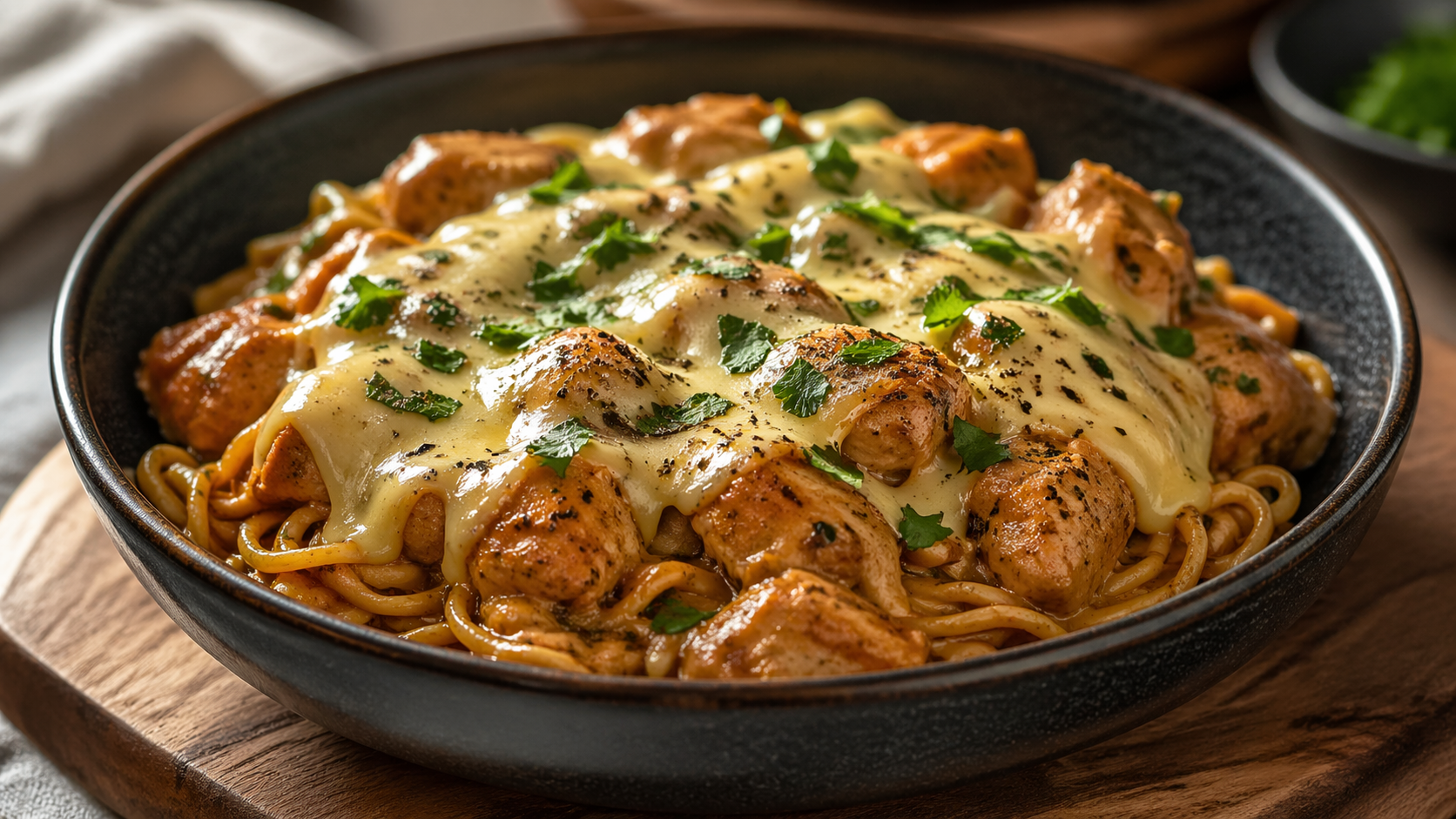
The fiery chicken ramen with creamy garlic sauce is a dish that brings a bold, spicy twist to classic comfort food.
Its rich, creamy sauce paired with fiery chicken and hearty noodles creates a symphony of flavors that will ignite your taste buds.
I first encountered this delightful recipe during a winter festival in Japan, where the locals used it as a warm, comforting meal during the chilly season.
The contrast of spicy and creamy elements not only warms you up but also makes for an unforgettable culinary experience.
Whether you’re a fan of spicy dishes or just looking to explore new flavors, this ramen promises to be both an adventure and a comfort.
Perfect for a cozy night in or an impressive meal for friends, it’s sure to become a favorite in your kitchen.
The History and Cultural Significance
• Fiery Chicken Ramen traces its origins to Japan, where it was originally created as a hearty meal during the post-war era.
• The dish evolved over decades as chefs experimented with spicier ingredients and richer broths, eventually becoming the beloved version we know today.
• In Japanese culture, this dish traditionally appears at winter festivals and gatherings, symbolizing warmth and togetherness.
• While many variations exist across different regions, the authentic version maintains a balance of heat and creaminess that sets it apart from imitations.
Recipe Overview
Nutritional Information (per serving)
Essential Equipment Guide
Large Stockpot: Essential for boiling the noodles and preparing the broth, ensuring even cooking and full flavor integration. Alternatives include a Dutch oven or large saucepan, but ensure it has a heavy bottom to prevent scorching.
Wok or Deep Skillet: Ideal for stir-frying the chicken and vegetables quickly and evenly, locking in flavors. A deep skillet can serve as an alternative, but ensure it has high sides to manage high heat cooking.
Immersion Blender: Useful for making the creamy garlic sauce smooth and velvety. A countertop blender can be used instead, but be cautious of hot splashes when blending.
Ingredients
For the Base
|
|
| Amount | Ingredient | Notes |
|---|---|---|
| 300 grams | ramen noodles | cooked according to package instructions |
| 1 liter | chicken broth | adds depth of flavor |
For the Chicken
| Amount | Ingredient | Notes |
|---|---|---|
| 500 grams | chicken breast | sliced thinly for quick cooking |
| 2 tablespoons | soy sauce | for seasoning |
For the Sauce
| Amount | Ingredient | Notes |
|---|---|---|
| 1 cup | heavy cream | adds richness |
| 4 cloves | garlic | minced for strong flavor |
Vegetables
| Amount | Ingredient | Notes |
|---|---|---|
| 1 cup | shiitake mushrooms | sliced, earthy flavor |
| 1 cup | baby spinach | adds freshness |
Seasonings
| Amount | Ingredient | Notes |
|---|---|---|
| 2 tablespoons | sriracha sauce | for heat |
| 1 teaspoon | sesame oil | for nutty aroma |
Preparation Methods
Flash Frying: This technique involves cooking the chicken quickly over high heat to seal in juices and create a crispy exterior. It is crucial for maintaining the chicken's tenderness and flavor.
Blending Hot Liquids: When making the creamy garlic sauce, blending hot liquids safely is important to avoid splatters. Use an immersion blender directly in the pot or let the sauce cool slightly before blending in a countertop blender.
Layering Flavors: Building the dish by adding ingredients in stages to layer flavors ensures each component retains its unique taste while contributing to the overall harmony of the dish.
Step 1: Prepare Ingredients
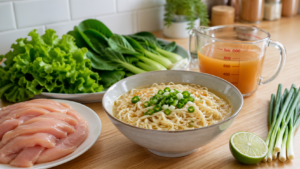
Gather all ingredients and equipment before starting.
Ensure chicken is sliced thinly and vegetables are prepped.
This step ensures you work efficiently and prevents last-minute scrambles.
Proper preparation is key to a smooth cooking process.
Step 2: Cook the Noodles
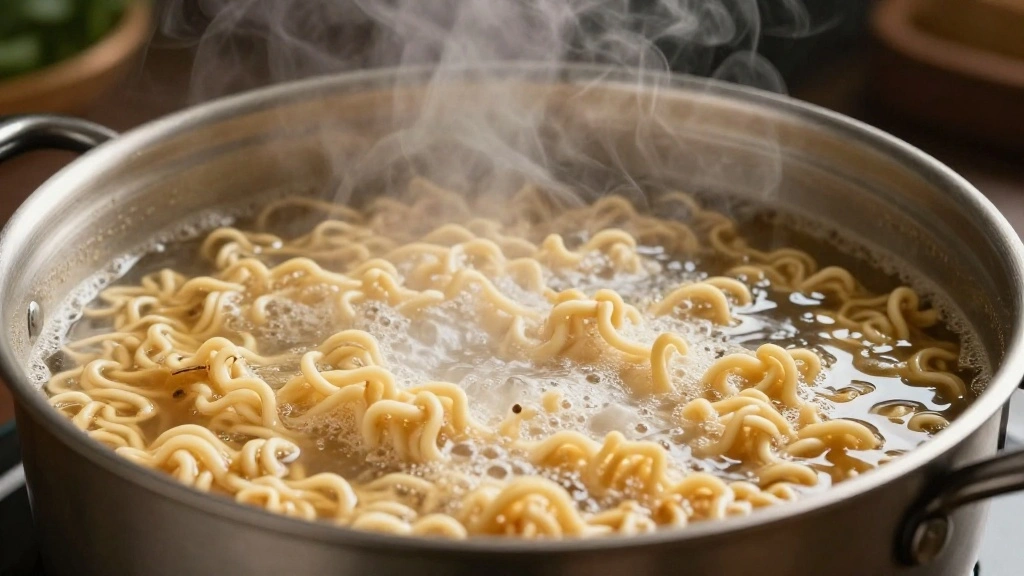
Boil the ramen noodles in a large stockpot filled with water.
Cook according to package instructions, typically 3-4 minutes.
Drain and rinse with cold water to stop cooking.
Set aside to be added later.
Step 3: Sauté the Chicken
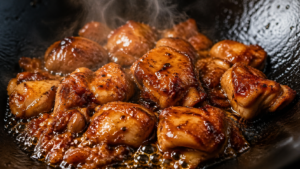
Heat a wok or deep skillet over high heat with a tablespoon of oil.
Add the sliced chicken and sauté until golden brown, about 5 minutes.
Ensure the chicken is evenly cooked on all sides.
Remove from heat and set aside.
Step 4: Prepare the Garlic Sauce
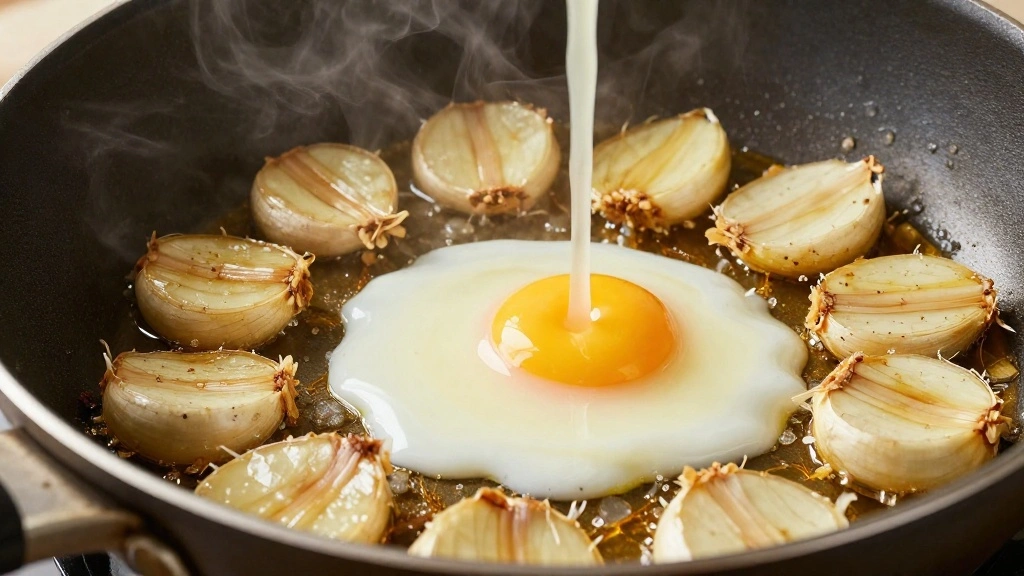
In the same skillet, reduce the heat to medium and add minced garlic.
Sauté until fragrant, about 2 minutes, being careful not to burn it.
Add heavy cream and bring to a gentle simmer.
Blend until smooth using an immersion blender.
Step 5: Combine Chicken and Sauce
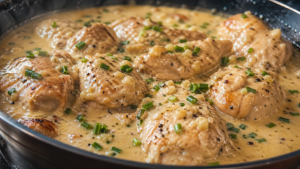
Return the cooked chicken to the skillet with the garlic sauce.
Stir in soy sauce and sriracha for added flavor and heat.
Simmer together for a few minutes to combine flavors.
Taste and adjust seasoning as needed.
Step 6: Add Vegetables
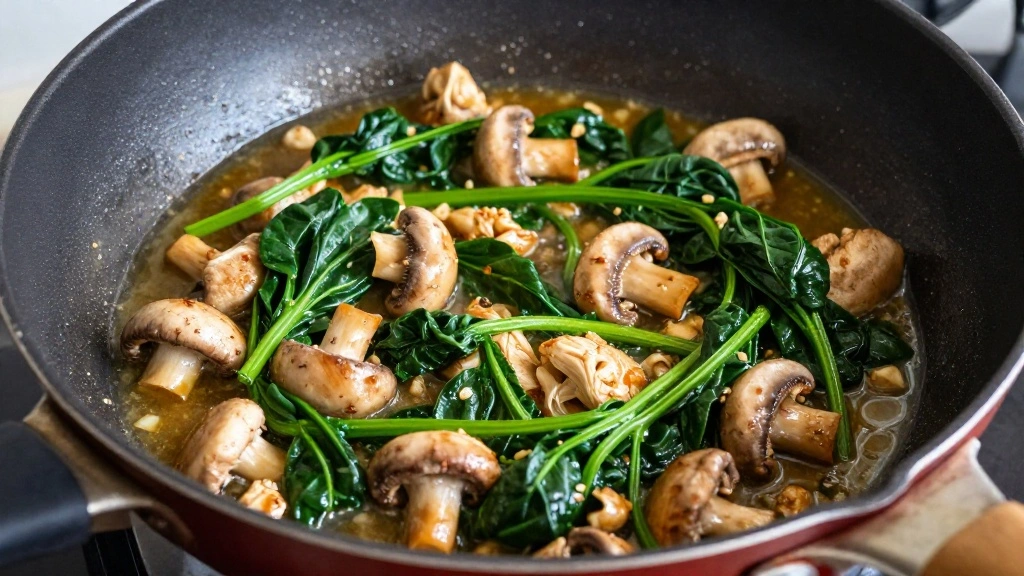
Add sliced shiitake mushrooms to the skillet and cook for 3 minutes.
Stir in baby spinach until just wilted.
The vegetables should remain vibrant and slightly crisp.
This step enhances the dish with freshness and color.
Step 7: Assemble the Ramen
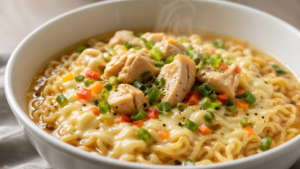
Place cooked noodles into serving bowls.
Ladle the creamy chicken and vegetable mixture over the noodles.
Ensure even distribution of ingredients in each bowl.
This creates a balanced and visually appealing dish.
Step 8: Garnish and Serve
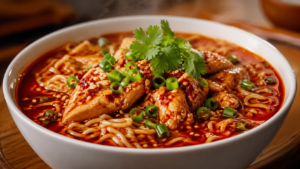
Drizzle each bowl with a touch of sesame oil for aroma.
Garnish with fresh herbs like cilantro or green onions.
Add chili flakes if extra heat is desired.
Serve immediately for the best flavor and texture.
Critical Timing and Temperature Guide
Noodle Cooking: Boil for exactly 3-4 minutes, until al dente. Avoid overcooking as noodles turn mushy.
Sautéing Chicken: Cook over high heat for 5 minutes, until golden and cooked through. Ensure even browning for best texture.
Sauce Simmering: Simmer cream sauce on medium heat for about 5 minutes. Avoid boiling to prevent curdling.
Pro Tips for Fiery Chicken Ramen
• Ingredient Selection: Choose organic chicken breast for the best texture and flavor. Fresh garlic and high-quality sriracha also make a significant difference.
• Preparation Secret: Marinate the chicken in soy sauce for 15 minutes before cooking to enhance flavor.
• Temperature Management: Ensure chicken is at room temperature before sautéing for even cooking.
• Texture Enhancement: Flash fry the chicken to lock in juices and achieve a crisp exterior.
• Flavor Layering: Add sriracha in stages to control heat and build depth in the sauce.
• Make-Ahead Strategies: Prepare sauce and refrigerate for up to 24 hours. Reheat gently before serving.
• Restaurant-Quality Finishing Touches: Use toasted sesame seeds as an additional garnish for a professional touch.
• Equipment Optimization: Use a non-stick skillet for easier cleanup and even cooking.
Troubleshooting Common Issues
• Texture Too Dense: Caused by overcooking noodles. Reduce boiling time slightly and rinse immediately after cooking.
• Flavors Unbalanced: Occurs when sauce is too spicy or bland. Adjust sriracha and soy sauce to taste during simmering.
• Curdled Sauce: Happens when cream boils. Keep temperature medium and stir constantly.
• Chicken Too Dry: Result of overcooking. Ensure slices are thin and cook briefly at high heat.
• Vegetables Soggy: Caused by overcooking. Add vegetables last and cook just until tender.
Variations and Regional Differences
• Korean Style: Includes kimchi and gochujang for a tangy, spicy flavor profile, with a cultural emphasis on fermentation.
• Thai Influence: Uses coconut milk instead of cream and adds lemongrass and lime leaves for a fragrant, Thai-style twist.
• Chinese Variation: Incorporates Sichuan peppercorns and Chinese five-spice for a bold, aromatic version.
• Western Fusion: Adds bacon and cheese for a richer, indulgent take popular in fusion restaurants.
Food Science Behind the Recipe
• Maillard Reaction: The process responsible for the browning of the chicken, enhancing flavor and aroma.
• Emulsification: When blending the sauce, creating a stable mixture of fats and liquids for creaminess.
• Heat Transfer: Understanding how heat affects different ingredients ensures proper cooking and texture preservation.
Frequently Asked Questions
What's the most common mistake people make when preparing Fiery Chicken Ramen? Overcooking the noodles, leading to a mushy texture.
Can I make this dish vegetarian? Yes, substitute chicken with tofu and use vegetable broth.
Is there a way to reduce the spiciness? Adjust the amount of sriracha to taste or omit it entirely.
How do I store leftovers? Store in an airtight container for up to 2 days, reheating gently to preserve texture.
Can I freeze the sauce? Yes, freeze for up to 1 month, thawing slowly in the refrigerator before reheating.
What's the best way to reheat this dish? Reheat gently on the stovetop, adding a splash of broth if needed.
What can I serve with this ramen? Accompany with a fresh salad or steamed dumplings for a complete meal.
Serving and Presentation Guide
• Traditional Presentation: Serve in deep bowls with garnishes arranged neatly on top.
• Family Style: Present in a large serving dish with individual bowls for self-serving.
• Gourmet Plating: Use a shallow bowl with a drizzle of sesame oil and artfully arranged herbs.
• Casual Dining: Serve with chopsticks and a spoon for broth sipping.
Conclusion
Fiery Chicken Ramen with Creamy Garlic Sauce is a dish that combines comfort with excitement, perfect for any occasion.
Its bold flavors and satisfying textures make it a standout meal that will impress your family and friends.
Take the plunge into this spicy, creamy world of ramen, and let your taste buds experience something extraordinary.